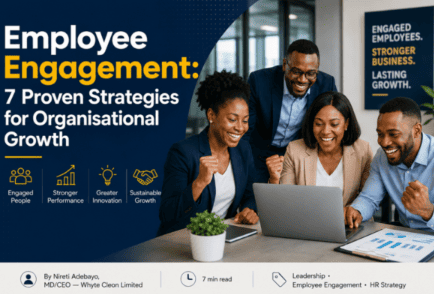

By Tope Adeyemi | Published: 2026 | 7 min read
Employee engagement is no longer a “nice to have” — it is a business-critical priority. According
to Gallup’s 2023 State of the Global Workplace Report, only 23% of employees worldwide are
actively engaged at work, costing the global economy an estimated $8.8 trillion in lost
productivity. For organizations that want to compete, grow, and retain top talent,
implementing effective employee engagement strategies is non-negotiable.
In this article, we break down the most impactful employee engagement strategies, explore the
root causes of disengagement, and provide actionable steps that HR leaders and managers can
implement immediately.
What Is Employee Engagement and Why Does It Matter?
Employee engagement refers to the emotional commitment an employee has towards their
organization and its goals. Engaged employees do not just show up — they invest their energy,
creativity, and passion into their work. They are your best ambassadors, your most productive
team members, and your strongest line of defense against high staff turnover.
When salary is the sole motivator, sustained engagement becomes increasingly difficult.
Research from Harvard Business Review confirms that employees who feel emotionally
connected to their work are significantly more productive, innovative, and loyal than those
driven purely by financial reward.
Key Signs of Low Employee Engagement to Watch For
Before you can improve engagement, you must identify where it is breaking down. The most
common disengagement triggers include:
- Knowledge and Skills Gaps: Employees can only deliver outstanding results when they
have the right tools, training, and information. Without continuous learning
opportunities, performance stagnates and frustration builds. - Feelings of Being Undervalued: When team members feel their contributions go
unnoticed, their sense of purpose erodes quickly — one of the most cited reasons for
voluntary resignation. - Toxic Competition Without Collaboration: Healthy competition drives performance, but when unbalanced, it fosters resentment and disunity across teams.
- Poor Communication from Leadership: Employees who don’t understand organizational direction feel disconnected and directionless.
- Lack of Growth Opportunities: A workplace with no clear career path signals to
employees that their future lies elsewhere
10 Proven Employee Engagement Strategies for 2026
- Align Training with Organizational Goals
Employees who understand how their personal development connects to the company’s
mission are far more motivated to learn and grow. HR and leadership should design training
programs directly tied to the organization’s vision, values, and strategic objectives — not
generic off-the-shelf courses. Conduct regular skills assessments, offer role-specific learning
paths, and invest in both hard and soft skills development. - Communicate Clearly and Consistently
One of the most underutilized employee engagement strategies is transparent communication. Every team member should clearly understand the organizational structure, their specific role, and how daily responsibilities contribute to broader goals. Hold regular all-hands meetings, publish internal newsletters and create open feedback channels. Employees who feel informed feel respected. - Build a Culture of Genuine Recognition
According to SHRM’s research on employee recognition, 81% of leaders do not consider
employee recognition a strategic priority — yet its absence is consistently cited as a primary
driver of staff turnover. A well-structured recognition program that celebrates individual and team wins builds morale, loyalty, and belonging.
Effective recognition includes:
• Regular, specific verbal and written appreciation
• Public acknowledgement in team meetings or company-wide forums
• Peer-to-peer recognition programmes
• Performance-based rewards tied to measurable outcomes - Prioritise Psychological Safety
Employees must feel safe to voice ideas, raise concerns, and make mistakes without fear.
Google’s Project Aristotle — one of the most comprehensive workplace studies ever conducted
— identified psychological safety as the single most important factor in high-performing teams. Leaders build this by modelling vulnerability and never penalizing honest feedback. - Foster Meaningful Teamwork and Collaboration
As Simon Sinek notes in Start With Why, “When people are emotionally invested, they want to
contribute.” Genuine collaboration transforms teams from groups of individuals into cohesive, high-performing units. - Invest in Manager Development
Employees don’t leave companies — they leave managers. Gallup’s findings show managers
account for at least 70% of the variance in employee engagement scores. Investing in
leadership training, coaching, and management development pays dividends across the entire
organization. - Offer Flexible Working Arrangements
Post-2020, employee expectations around flexibility have fundamentally changed.
Organizations offering hybrid working, flexible hours, or remote options consistently report
higher engagement and lower attrition. Flexibility signals trust — and trust is the foundation of engagement. - Create Clear Career Progression Pathways
When employees can see a clear, achievable growth path they are far more likely to commit long-term. Conduct regular career conversations, create individual development plans, and promote from within whenever possible. - Cultivate a Strong, Positive Company Culture
Company culture defines the values, behaviors, ethics, and social environment that shape
everyday work experiences. A negative culture creates burnout, stress, and disengagement. A
strong culture built on respect, inclusion, and purpose enhances job satisfaction, team
cohesion, and organizational resilience. - Measure Engagement Regularly and Act on Results
You cannot improve what you don’t measure. Use regular employee engagement surveys, pulse checks, and one-on-one check-ins to gather honest feedback. Crucially, act on what you hear —employees who see their feedback leads to real change become more invested in the
organization.
“When people are emotionally invested, they want to contribute”- Simon Sinek, Start With Why
Whyte Cleon’s Employee Engagement Initiatives in Action
At Whyte Cleon, here are few of our flagship initiatives that bring these strategies to life:
Cleon Health Walk Our annual free public wellness event brings together individuals, families, and corporate teams for a day of walking, free health checkups, and wellness activities. Because a healthy workforce is an engaged workforce.



Funtastic Sport Fest Our annual corporate sports event open to the public, featuring athletics, racing, and fun activities designed to build team cohesion, break barriers, and celebrate the human side of work. Funtastic Sport Fest 2025 was a tremendous success and we’re already looking forward to 2026.



Team Bonding — Movie Night (Wakanda Forever) Engagement doesn’t always happen in a boardroom. The Whyte Cleon team came together for a special movie night to watch Black Panther: Wakanda Forever. It was a simple but powerful reminder that the best teams are built on moments, not just meetings.


Conclusion: Building a Workplace Where People Thrive
Sustainable employee engagement is not a one-time initiative — it is an ongoing commitment
to seeing, hearing, and investing in your people. The organisations that lead in engagement
understand a simple truth: when employees feel valued, supported, and connected to a
purpose larger than themselves, they bring their best to work every single day.
Start with one strategy this week. Build from there. Your people are worth the investment
Stay Connected with Whyte Cleon:
Follow us on social media for daily HR tips, engagement strategies, and workplace insights — because great leadership never stops learning.
Subscribe to our YouTube channel for expert videos, event highlights, and practical guides to building a thriving workplace culture.
Follow us today and join a growing community of HR professionals and business leaders who are transforming the way people experience work.
References
• Gallup. (2023). State of the Global Workplace Report
• SHRM. Managing Employee Recognition Programs
• Gallup. Employee Engagement Drives Growth
• McKinsey & Company. (2023). The State of Organizations
• Sinek, S. (2009). Start with Why. Portfolio/Penguin.
• Google rework. Guide: Understand Team Effectiveness (Project Aristotle)