

Whyte Cleon Limited |

Employee Engagement: The Panacea for Organisational Growth

Employee Engagement: The Panacea for Organisational Growth

Employee Engagement: 7 Proven Strategies for Organisational Growth  By Nireti Adebayo, MD/CEO — Whyte Cleon Limited | 7 min read | Leadership · Employee Engagement · HR Strategy Table of Contents Why Employee Engagement Drives Organisational Growth What Employee Engagement Actually Looks Like in High-Performing Teams How to Improve Employee Engagement in the Workplace The Whyte Cleon Employee Engagement Strategy The Strategic Value of Employee Engagement Frequently Asked Questions References Introduction Employee engagement is one of the most powerful drivers of organisational growth, influencing productivity, retention, innovation, and long-term business performance. At Whyte Cleon Limited, we strongly believe that employee engagement is among the greatest drivers of organisational growth. It is the foundation upon which every sustainable HR strategy is built. As organisations compete for high-calibre talent in a hybrid and remote work environment, employee engagement has become more important than ever. It shapes how employees think, feel, and act at work — directly influencing business performance. Why Employee Engagement Drives Organisational Growth Employee engagement is no longer about filling roles — it is about building a workforce that drives innovation, agility, and long-term success. According to Deloitte’s 2024 Global Human Capital Trends, 79% of HR leaders prioritise employee engagement and continuous development as essential to organisational success. Organisations with high employee engagement consistently outperform others in productivity, profitability, and employee retention. What Employee Engagement Actually Looks Like in High-Performing Teams Engaged employees are more productive, innovative, and committed to organisational success. They willingly go the extra mile because they care about outcomes. Strong engagement improves teamwork, accountability, and customer satisfaction. Engaged employees also build stronger client relationships, leading to better service delivery and long-term loyalty. How to Improve Employee Engagement in the Workplace Improving employee engagement requires intentional leadership, communication, and recognition. Key strategies include training, incentives, transparent communication, and creating a culture of trust. Technology also plays a major role in improving engagement in modern workplaces. The Whyte Cleon Employee Engagement Strategy At Whyte Cleon, we strengthen employee engagement through structured development programmes, leadership clarity, and continuous recognition. We believe engagement is not a one-time initiative — it is a leadership practice embedded in daily operations. Employees are empowered to contribute ideas, take ownership, and participate in decision-making. The Strategic Value of Employee Engagement Employee engagement is not just an HR initiative — it is a core business strategy that drives productivity, profitability, and sustainability. When employees are engaged, organisations experience stronger performance, reduced turnover, and improved innovation. Ultimately, employee engagement is the foundation of long-term organisational growth. Frequently Asked Questions What is employee engagement? Employee engagement refers to the emotional commitment, motivation, and connection employees feel towards their organisation and its goals. Engaged employees contribute more effectively to business success. Why is employee engagement important for organisational growth? Employee engagement improves productivity, retention, innovation, customer satisfaction, and overall business performance. It is a key driver of sustainable growth. How can organisations improve employee engagement? Organisations can improve engagement through leadership, communication, recognition, training, fair compensation, and employee involvement in decision-making. What role does leadership play in employee engagement? Leadership sets the culture of engagement. Leaders who communicate clearly, show empathy, and recognise contributions build stronger, more committed teams. References Deloitte (2024). Global Human Capital Trends PwC (2024). Workforce Insights: What Employees Want Now SHRM (2024). Compensation and Benefits Report LinkedIn Talent Blog (2024). Financial Wellness in the Workplace Harvard Business Review (2024). HR and Workplace Strategy Articles

Employee Engagement: The Panacea for Organisational Growth

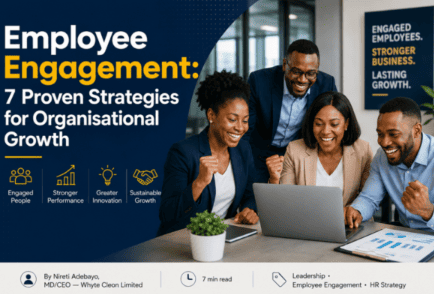
By Nireti Adebayo, MD/CEO — Whyte Cleon Limited | 7 min read | Leadership · Employee Engagement · HR Strategy

Table of Contents


Nireti Adebayo

Introduction

Employee engagement is one of the most powerful drivers of organisational growth, influencing productivity, retention, innovation, and long-term business performance. At Whyte Cleon Limited, we strongly believe that employee engagement is among the greatest drivers of organisational growth. It is the foundation upon which every sustainable HR strategy is built.

As organisations compete for high-calibre talent in a hybrid and remote work environment, employee engagement has become more important than ever. It shapes how employees think, feel, and act at work — directly influencing business performance.

Why Employee Engagement Drives Organisational Growth

Employee engagement is no longer about filling roles — it is about building a workforce that drives innovation, agility, and long-term success.

According to Deloitte’s 2024 Global Human Capital Trends, 79% of HR leaders prioritise employee engagement and continuous development as essential to organisational success.

Organisations with high employee engagement consistently outperform others in productivity, profitability, and employee retention.

What Employee Engagement Actually Looks Like in High-Performing Teams

Engaged employees are more productive, innovative, and committed to organisational success. They willingly go the extra mile because they care about outcomes.

Strong engagement improves teamwork, accountability, and customer satisfaction.

Engaged employees also build stronger client relationships, leading to better service delivery and long-term loyalty.

How to Improve Employee Engagement in the Workplace

Improving employee engagement requires intentional leadership, communication, and recognition.

Key strategies include training, incentives, transparent communication, and creating a culture of trust.

Technology also plays a major role in improving engagement in modern workplaces.

The Whyte Cleon Employee Engagement Strategy

At Whyte Cleon, we strengthen employee engagement through structured development programmes, leadership clarity, and continuous recognition.

We believe engagement is not a one-time initiative — it is a leadership practice embedded in daily operations.

Employees are empowered to contribute ideas, take ownership, and participate in decision-making.

The Strategic Value of Employee Engagement

Employee engagement is not just an HR initiative — it is a core business strategy that drives productivity, profitability, and sustainability.

When employees are engaged, organisations experience stronger performance, reduced turnover, and improved innovation.

Ultimately, employee engagement is the foundation of long-term organisational growth.

Frequently Asked Questions

What is employee engagement?

Employee engagement refers to the emotional commitment, motivation, and connection employees feel towards their organisation and its goals. Engaged employees contribute more effectively to business success.

Why is employee engagement important for organisational growth?

Employee engagement improves productivity, retention, innovation, customer satisfaction, and overall business performance. It is a key driver of sustainable growth.

How can organisations improve employee engagement?

Organisations can improve engagement through leadership, communication, recognition, training, fair compensation, and employee involvement in decision-making.

What role does leadership play in employee engagement?

Leadership sets the culture of engagement. Leaders who communicate clearly, show empathy, and recognise contributions build stronger, more committed teams.

References


Deloitte (2024). Global Human Capital Trends

PwC (2024). Workforce Insights: What Employees Want Now

SHRM (2024). Compensation and Benefits Report

LinkedIn Talent Blog (2024). Financial Wellness in the Workplace

Harvard Business Review (2024). HR and Workplace Strategy Articles

Related Posts